Let's know what Indian culture is.
Hello everyone do know today is Hindi Diwas. Our school going children knows it very well and today's blog is based on INDIAN CULTURE so here we start read it carefully.
There is a long tradition of sophistication of a country or society. The hunger for advanced and sublime ideas prevalent in that tradition is called the culture of a country or society, which gives a momentum to the life of that country or society. Culture includes the ideals of a country, period and its way of life. All the ideas, crafts, objects derived from the tradition are called the culture of a country.

![Indian Culture Essay — 1400 Words Essays [Top 5+]](https://gupshups.org/wp-content/uploads/2020/05/Indian-Culture-essay.jpg)
Meaning of culture:
The word culture has been coined. In the literal sense, culture means: to improve or to refine. Culture is considered a creation in the Yajurveda. What is worthy of selection in the world is culture. Dr. Nagendra has written that culture is that stage of human life, where its Prakrit raga malice is erased.
In this way, there is a group culture of values, establishments and beliefs to revise and complete life. The culture of any country is holistic in itself. This makes it clear and its child form. Culture is variable.
This is the reason why one should not compare the cultural forms of one period with the manifestations of the other forms and the cultural forms of the other period, nor should they call each other inferior and superior. The elements that contribute to make a human being a social animal, is the same culture. In conclusion, the whole cognitive, functional, reflective qualities that support human welfare are called culture. There is idealism and transitivity in the culture.
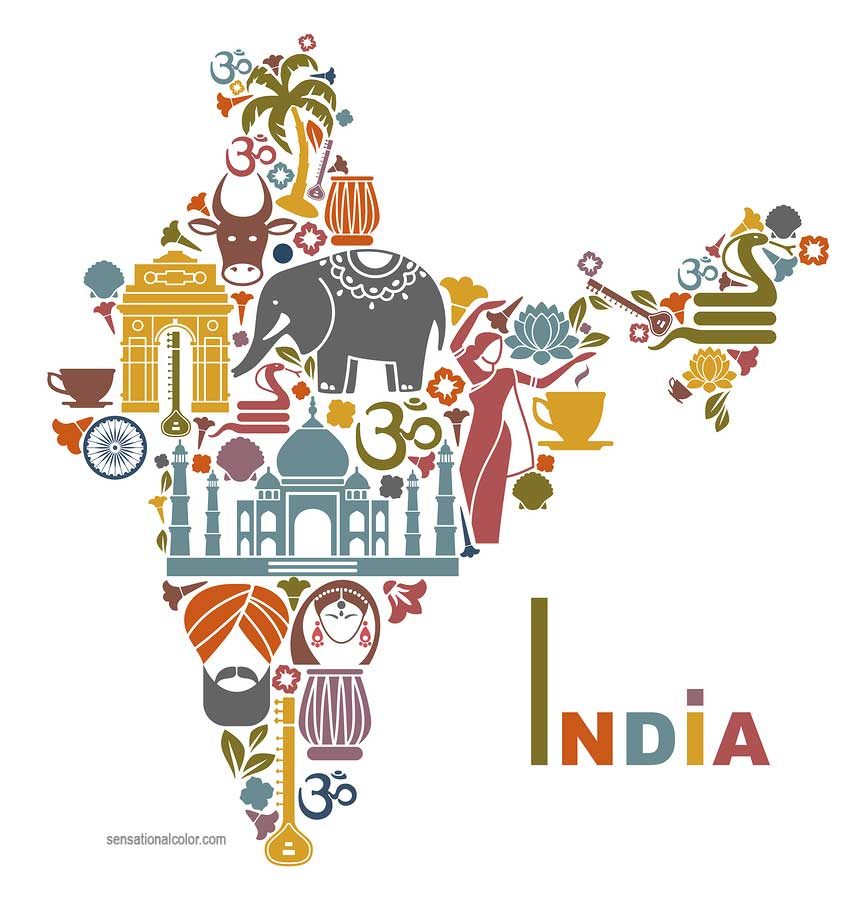
Civilization and Culture:
Civilization is called body and culture is called soul; Because the meaning of civilization is the physical development of human beings, under which the gross objects of a conceptual and civilized society, which are seen from outside, by which they are considered more advanced and higher than others.
For example, rail, motor, road, airplane, beautiful costumes, mobile. Under the culture are those internal qualities, which are the values and ideals of society, such as gentleness, warm-heartedness, sympathy, humility and gentleness. Civilization and culture are closely related; Because the material thing that a human being creates is first born in thoughts. When an artist makes a painting, it is his culture.
Civilization and culture complement each other. A numbered civilization cannot be imagined. Whatever will be civilized, it will be cultured. The domain of civilization and culture is human society. Indian culture is a flowing stream like the Ganges, starting from the clave and circling the land of time to us.
Just as many rivers and streams from the origin of the Ganges to the sea are contained in it, so is our culture. Our culture is one of the oldest cultures in the world. It has kept its cultural heritage intact despite enduring many strikes.
In our country Shakas, Huns, Yavans, Mongols, Mughals, Britishers, there were so many castes and species, but all became united in Indian culture. In the thoughts of Dr. Gulabrai: “There is a composite unity in Indian culture.
In this, the form of all the cultures combined together in the Ganges, like the river Ganges (Ganges) acquires the holy form. There are such forms in the Akhand stream of Indian culture, whose existence is nowhere to be seen. Despite such a combination, it exists in its original and unchanged form. "
Specifications of Indian culture:
Indian culture is characterized by many specialties. Among the specialties due to which he is alive are:
1.Spirituality: Spirituality is the soul of Indian culture. Spirituality has not left any part of Indian culture untouched. In the principle of rebirth and karma, the faith of Indians in the continuation of life has been strengthened and four priests of meaning, religion, work, salvation have been given importance.
2. Sense of tolerance: An important feature of Indian culture is its sense of tolerance. Indians have endured the atrocities of many invaders. Education of tolerance to Indians Ram, Buddha. Mahavir, Kabir, Nanak, Chaitanya Mahatma Gandhi etc. have been given by great men.
3. Karmism: In Indian culture, inspiration has been given to do karma everywhere. Here, the hereafter is called karmalok. In the Gita, emphasis has been laid on the virtuous mother, Faleshu Kadachan. It is said in the Atharvaveda - If diligence is in my right hand, then victory will surely be in my left hand.
4. The spirit of the world: Indian culture considers the whole world as a family and wishes welfare, happiness and healing for all beings. It is not considered appropriate to see any creature unhappy in the world. Survey Bhadrani Sukhin: Santu Survey Niramaya:. Survey Bhadrani Pashyantu, Maa Ksantha Dukhmayuayat.
5. Co-ordination: The most important feature of Indian culture is co-ordination. Rushi, Manishi, Maharishi and social reformers have always emphasized on coordination. This syncretism of Indian culture is unmatched. Despite the unity in diversity, there is amazing coordination here. The specialty of renunciation in Bhoga is the specialty here.
6. Caste and Varnashram System: Varnashrama and caste-system was very important in Indian culture in terms of division of labor. This system was based on virtue and action, not on birth. 100 years of imagined life were divided according to Brahmacharya, Grihastha, Vanaprastha, Sannyas. This system was helpful in the growth of happiness and peace in society.
7. Sacraments: Relations have been given special importance in Indian culture. These rites were related to the religious practices of purification in the society. The importance of these rituals is to keep the values, patterns and ideals of individuals disciplined and initiated.
8. Importance of Guru: Gura has been given importance in Indian culture and has been considered as a provider, welfare and guide. Gura means: the destroyer of darkness.
9. Importance of education: In Indian culture, education has been considered as the holiest process, which develops children's mental, mental, moral, spiritual.
10. Sense of Nationality: The sense of nationality has been given special importance in Indian culture. It is worshiped as Janani Janmabhoomi Swargadpari Gariyasi.
11. Optimism: Indian culture is optimistic. She protests to despair.
12. Stability: This is an important feature of Indian culture. The culture of Greece, Egypt, Rome, Babylonia has reached its peak and is destroyed. Indian culture is alive even today after enduring many fuss.
13. Atithodevabhav: In Indian culture, the guest has been considered as a god. If enemies also come as guests, then they should be welcomed.
Culture is undoubtedly of special importance in human life. Culture is our brain, our soul. In the culture itself, human values are transferred. Culture is actually a system of human-made ideals and values, which are expressed in the human lifestyle. Civilization and culture complement each other.


Comments